Showing posts with label Cashless. Show all posts

Monday, April 13, 2015

Will Cashless Payments Cause Us to Spend More?


Contactless payment is widely regarded by many as the future of payments. Many believe that technology such as the Card Case app or Apple Pay will start to dominate the payments world as they are easy and fast forms of payments. In some cases you may not even need a wallet anymore.

Businesses are looking increasingly at giving customers the easiest possible experience in terms of their consumer journey. They want to make sure that at the end of the journey the customer doesn’t have to struggle to part with their hard earned money by waiting in long queues or wondering which credit card has the most on. Many believe it is in the best interests of the customer to be able to swipe something quickly and walk out with your new purchase. However, as easy and convenient as it is, could it mean increased spending for us on a day to day basis?

New research has shown that many people, especially the millennial generation, find that paying with cash is an easier way to not spend as much money. Personally, as someone who is fresh out of University, with student debts and an apartment in a foreign country, I am trying very hard to make every dollar count. This means taking out a certain amount of money in cash at the start of each week and saying to myself, I will spend this much and no more. It is a very simple budgeting technique used by many; however contactless payment threatens it. Waving a phone over a scanner or quickly swiping a card, to me and I’m sure to many others, does not really feel like you are parting with money as it does with cash.

More convenient payment systems will mean even if you have no cash, a consumer will simply spend little bits here and there, especially with credit. Obviously internet statements are a good way of keeping track every now and again but that will not stop when you want that desert at a restaurant instead of having a cash limit.

So much of the excitement surrounding the rise of contactless payments is focused on how much it is for the customer without looking so closely about the benefits for businesses. An interesting development for me would be a form of inbuilt budgeting system within the app or form of payment. As contactless payment develops, as does the internet of things, meaning more interconnection. This could mean a weekly budget for those millennials trying hard to make the pennies count that is on a payment app which is connected to a calendar which may warn of upcoming events that could stop you getting that pair of jeans that may not strictly be necessary. In a world where businesses need to increasingly think about the consumer’s experience, helping them with little things like that could ultimately mean the difference between gaining or losing a customer.

About the Author: Harry Kempe, a marketing intern at IIR USA, who works on various aspects of the industry including social media, marketing analysis and media. He is a recent graduate of Newcastle University who previously worked for EMAP Ltd. and WGSN as a marketing assistant on events such as the World Architecture Festival, World Retail Congress and Global Fashion Awards. He can be reached at hkempe@IIRUSA.com


Share this article with your social network, just click below to share now!


Tuesday, March 10, 2015

Digital Transactions Surpass Cash in UK

This past weekend saw the end of cash leading as the most popular payment method in the UK. On Sunday March 8th, more transactions were made via credit, debit and other cashless methods than that of cash.

The Payments Council had predicted that this switch would occur in the UK in 2015.

See the figures in the article from The Telegraph, one shows the total value of cash vs. credit transactions from 2014 and the credit transactions out valued cash at a rate of 250:1. This is due to the fact that large corporations who deal with high-value transactions rarely touch cash.

The figures also continue to show the decreasing average payment on a credit or debit card, the rise of contactless payments, and the decrease of average cash transactions over the last few years. These are telltale signs that cash is losing its grip on consumers and is being replaced by digital transactions.

It is suggested that by 2023, cash transactions will fall to just 13 billion and the cashless alternative will grow to a staggering 27 billion. 


The direction of the payments industry is hard to deny, as years pass cash will begin to become an obsolete payment method that is rarely used by the everyday consumer. As new technology continues to emerge, cash slips a little further from relevance.


How long will it be until cash is no longer carried by the everyday consumer? Only time will tell but right now it seems as if it is sooner rather than later.


Share this article with your social network, just click below to share now!


Monday, August 20, 2012

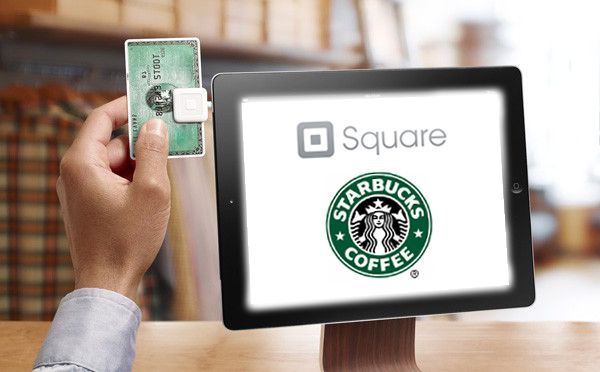
Cashless Squares Up At Starbucks

(Photo: BetaNews.com)
A typical encounter at the cash register consists of either fumbling with cash and change, or pulling out your credit card, swipe it, wait for an authorization, followed by a signing of a console or receipt. An alternative payment method has been emerging in small, and micro, businesses. 

These alternative payment methods will be more apparent in coming months as a big deal has been struck by caffeine distribution giant, Starbucks, and mobile payment startup, Square.

In early August, Starbucks has struck a deal and will be investing $25 million to outfit a network of 7000 participating stores with the mobile payment system, Square. Howard Schultz, CEO of Starbucks, notes that, “the smartphone is the primary device in our lives.” This deal will provide Starbucks with a significant discount on credit card processing fees. Traditional credit card processing methods required businesses to pay the credit card company 2.5-5% plus equipment rental and usage charges. Square on the other hand charges a flat 2.75% with free equipment, in the form of a dongle that attaches via headphone jack on any smartphone or tablet.

In 2009, Jack Dorsey, founder of Twitter, took a leap in to innovating the mobile payment space. With a simple philosophy, “everyone should be able to accept credit cards. It should be easy and free to get set up, it should use simple technology people already own, and, most importantly, it should instantly adapt to any size business”.

Square consists of four major components: a card reader, Pay With Square app, Square Register, and a Square Card Reader. The card reader is a plastic device which plugs into the audio jack of an iPhone, iPod Touch, iPad and Android based mobile phones. This allows any smartphone to be used as a credit card swiping machine. Pay With Square is an app which allows customers check in a Square enabled business and set up tabs and pay with their names. It also enables them to receive electronic receipts. The Square Register is available for the iPad and transforms it into a credit card management system. Square Card Reader is another app available free of cost for iOS and Android, and is the actual interface that is utilized by the business to manage payments made via the card reader or Pay With Square app.

Previously focused around aiding small and micro businesses, with this $25 million investment from Starbucks, Square has raked in $200 million in new funding, positioning Square with a $3.25 billion valuation. As of March, Square has processed $4 billion a year in mobile payments transactions in this year alone through its 1 million registered merchants. 

With well-established companies, such as PayPal, Google Wallet, Intuit, LevelUp, and dozens others, fighting to gain market share in the space of mobile payments, the addition to the 7000 stores that have been added through the Starbucks deal, Square has taken a huge lead ahead of their growing field of competition.

The exposure provided through Starbucks to spotlight an seamless alternative payment method will greatly expand the emerging cashless zeitgeist. Expect to see more alternative payment methods at an ever growing number businesses, from your corner store to one of the thousands of Starbucks coffee shops.

About the Author


Phil Ng is a Social Media Analyst at IIR USA with a specialized focus on technology and technology culture. He may be reached at PNg@iirusa.com.


Share this article with your social network, just click below to share now!