Showing posts with label Paypal. Show all posts

Tuesday, July 22, 2014

The Future of Payments

Business Insider recently published a presentation highlighting the future of the ever evolving payments industry.

In their presentation, they map out important trends that are fueling this change; payment apps are on the rise, mobile registers, e-commerce, and the steady decline of paper products (i.e. cash/checks). Then, they go on to map out what the future has in store for payments.

Take a look at the presentation from Business Insider. It is highlighted by charts/slides exclusive to BI Intelligence and are definitely worth taking a look at - they shed some serious light on what to expect in the coming years.  

Do you agree with these projections in their presentation? What do you think the future holds for the payments industry? Let us know in the comment section.

Story via Business Insider


Share this article with your social network, just click below to share now!


Wednesday, January 30, 2013

The NFC Solution for the iPhone


The iPhone may not be NFC-enabled, but some payment players are trying to change that. U.S. Bancorp has been testing a touch-to-pay technology for iPhone users. The NFC-enabling technology is built into the smartphone case. This is big news for iPhone users, especially as the iPhone has not yet been equipped with NFC technology.
For iPhone customers, this opens up a new form of tap-and-go payment. Niti Badarinath, U.S. Bank's digital strategy and mobile banking head, said in an interview last year that he views mobile payments as "the next frontier."
NFC has been under fire from several players in the payments ecosystem, includingPayPal. But this latest move shows that there are many industry players who believe in NFC. With the market share for iPhones in the U.S. at 32%, will this NFC-equipped case change the game for NFC proponents?
Join us at the Prepaid Expo in March where industry experts from Giftango, Visa, Blackhawk, Oberthur Technologies and many others will be discussing the future of NFC, mobile wallets and other emerging technologies.


ABOUT THE AUTHOR

Ryan Geswell is a New Media Analyst in the Finance Division at IIR USA with a background in Marketing and Media. He can be reached at rgeswell@iirusa.com.


Share this article with your social network, just click below to share now!


Friday, January 18, 2013

Behold: Frictionless, Conversational Commerce!

By Marc Dresner, IIR
If you’re not already familiar with Chirpify, you’re not alone. But don’t be surprised if the name becomes as common to social media vernacular as the network that inspired it.
Many people first heard about the start-up last summer after an 80-year-old artist’s attempt to “restore” a 100-year-old fresco of Jesus Christ in Spain went disastrously, almost comically wrong and the results went viral.
On the heels of the “Ecce Homo” fiasco (as the botched project has come to be known), an artist/musician plastered the messianic mess on a T-shirt and sold hundreds of them. Directly. To her followers. On Twitter. In a matter of hours. Through Chirpify.
Ironically, to that point, nary a peep had been uttered about the fledgling company, which raised $1.3 million in a Series A round back in April.
But the significance of several thousand dollars in T-shirt sales didn’t escape the attention of The Wall Street Journal and other business press this time for good reason: The incident officially ushered in the age of frictionless, conversational commerce.
Chirpify Senior Account Manager Heath Black claims that social media heretofore haven’t been successfully deployed in the payments industry due largely to “friction”—too many steps on the current path to purchase between a social network and checkout.
Social media haven’t been successfully deployed in the payments industry due largely to “friction”—too many steps on the path to purchase between a social network and checkout

Heath Black
If you’re starting from a social media platform, he explained, to buy something from a merchant online you must link from the social network to a website, locate the advertised item, log in or sign up and jump through whatever other hoops may be required to make the purchase.
“Friction is burdensome and causes tension,” said Black, “so there’s a high probability that the customer will abandon their quest along the way.”
Worse yet, friction effectively negates the contextual value of a social media interaction.
“The seller starts out talking to an engaged audience, but then has had to pull them off the social medium—out of and away from the conversation—in order to complete the transaction,” said Black. “You lose the social aspect of the sale.”
Chirpify, by contrast, enables merchants and customers to transact financially and relationally at once by eliminating the need to leave the social network.
Chirpify enables merchants and customers to transact financially and relationally at once by eliminating the need to leave the social network

How it works: Chirpify links the user’s Twitter account to a Paypal account. Sellers—individuals, companies, political fundraisers—tweet whatever it is they’re selling. The Twitter user simply hits reply and types in “buy” (or some other short term prescribed by the seller like “gimme”) to complete the transaction in one clean, easy step.

The process is so simple, noted Black, that an independent artist who uses Chirpify remarked that compared to traditional ecommerce, “[Chirpify] feels like street vending.”
“On Twitter, the stream is the street,” said Black. That street currently spans customers in 43 countries. And because the money is routed through Paypal, Chirpify accepts multiple currencies in a secure environment. It’s also platform agnostic—smart or dumb phone, tablet, computer—the device doesn’t matter.
For those looking for proof of concept, Black estimates that Chirpify’s sign-up page—the one and only step that doesn’t involve a direct sale—has a 70% conversion rate (roughly seven times that of the average ecommerce site sign-up).
Chirpify also reportedly significantly outperforms traditional ad click-through rates (0.2%), averaging 1.3%.
But Chirpify’s most compelling feature may be its potential reach.
Black cited a campaign for a Nashville record label promoting free downloads of a new song. According to Black, within 2 hours the listing was re-tweeted 33 times, which translates to 115,000 potential viewers based on the average number of Twitter followers to whom it was re-tweeted.
It’s also worth noting that every re-tweet constituted a defacto endorsement by a trusted, independent source, not a targeted message from a marketer. “These are essentially word-of-mouth recommendations, only they’re broadcasted to anyone who follows the person who passes along the message,” said Black.
Lastly, for those companies grappling with Wannamaker’s dilemma, there’s no issue calculating the ROI on direct marketing through Chirpify. You just look at a tweet and see how it performs (the company collects a 4% commission on each sale).

ABOUT THE AUTHOR
Marc Dresner is IIR USA’s senior editor and special communication projects lead. He is the former executive editor of Research Business Report, a confidential newsletter for the market research and consumer insights industry. He may be reached at mdresner@iirusa.com. Follow him @mdrezz.


Share this article with your social network, just click below to share now!


Monday, January 14, 2013

Predictions on Apple as the Wallet War Continues to Pick up Steam

Industry insiders scrutinize Apple’s every movement: Most recently up for debate was Apple’s wallet debut with Passbook, as well as the revelation that the iPhone 5 would not support NFC.

Apple plays its cards pretty close to the chest, but one industry analyst predicts that the company is revving up for the mobile payments race in a big, big way.

According to Investors.com, Dan Perlin, a RBC Capital analyst, predicts that Apple is likely to launch a closed-loop loyalty program dubbed iPoints. Perlin thinks Apple will be able to leverage the 400 million card accounts already on file with iTunes to build a payments and loyalty program.

NFC
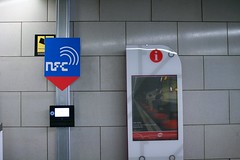
NFC (Photo  nicolasnova)
 “This could give Apple an edge over other emerging mobile payment systems such as Google, Square, and eBay’s PayPal unit,” Perlin told Investors.com.

Apple’s acquisition of AuthenTec in April 2012 suggests that the next generation iPhone, the 5S (set to be released in June) will be equipped with NFC – only adding to the buzz. For more on this story and full article from investor.com click here

Do you think Apple is planning a major entry into the payments space this year? Is this Apple’s attempt to try the same closed-loop, loyalty-based system Starbucks has created? 

At Prepaid Expo this March, there will be plenty of time to debate these new movements in the mobile payments war, including insights from Patrick Gauthier, Head of Product Strategy & Business Operations, Retail Services at PayPal and an on-stage debate on the future of the payments ecosystem with American Express, Green Dot, MasterCard and InComm.

ABOUT THE AUTHOR

Ryan Geswell is a New Media Analyst in the Finance Division at IIR USA with a background in Marketing and Media. He can be reached at rgeswell@iirusa.com.
Enhanced by Zemanta


Share this article with your social network, just click below to share now!


Wednesday, September 12, 2012

The Future of Alternative Payments

Research was conducted to figure out where exactly card-based e-commerce and alternative payments were going around the world. Whether it was trying to figure out if (when?) alternative payments will eclipse card-based e-commerce or whether new innovations would decrease or increase, the results of the study painted an interesting picture for the future. 


The research was conducted by Bain Capital and Advent projects that e-commerce transactions will grow at an annualized rate of14 percent from 2010 to 2015 rising from USD $942 billion. In addition to this, there is something that is somewhat staggering: Alternative payments are actually behind card based e-commerce. But not to worry about such numbers, alternative payments are expected to pass card based e-commerce by 2015. 
BERLIN, GERMANY - SEPTEMBER 05:  A patient pay...
BERLIN, GERMANY - SEPTEMBER 05: A patient pays a quarterly consultion fee while handing over her Allgemeine Ortskrankenkasse (AOK) health insurance card on September 5, 2012 in Berlin, Germany. ( Getty Images)

The US and UK have the highest amount of e-commerce penetration rates at 77 and 60 percent respectively. In Netherlands, e-commerce growth is underpinned by an electric payment called iDEAL. iDEAL allows people to make bank transfers without entering their credit or debit information online. WorldPay estimates that there are as many as 230 alternative payments providers. 

Some believe that there can be an AP provider which can challenge the established e-commerce players. They also predict that there will be growth a 50 percent a year annually in China and Poland. Among the developed nations, Japan is expected to have a growth of 20 percent. And with the growth of other nations, prepaid may take off in ways that would turn society into more a plastic card carrying world than it ever was before. 

About the Author

Adam Wells studies English at Pace University.


Share this article with your social network, just click below to share now!


Monday, August 20, 2012

Cashless Squares Up At Starbucks

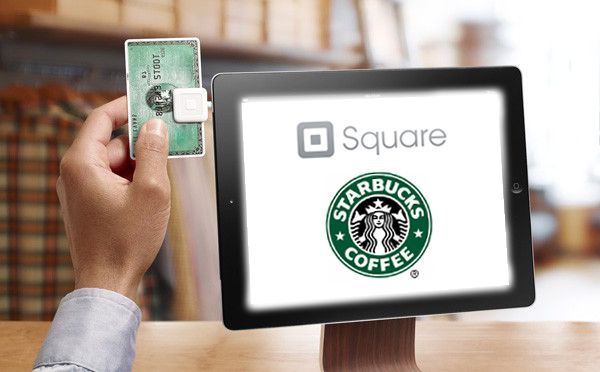
(Photo: BetaNews.com)
A typical encounter at the cash register consists of either fumbling with cash and change, or pulling out your credit card, swipe it, wait for an authorization, followed by a signing of a console or receipt. An alternative payment method has been emerging in small, and micro, businesses. 

These alternative payment methods will be more apparent in coming months as a big deal has been struck by caffeine distribution giant, Starbucks, and mobile payment startup, Square.

In early August, Starbucks has struck a deal and will be investing $25 million to outfit a network of 7000 participating stores with the mobile payment system, Square. Howard Schultz, CEO of Starbucks, notes that, “the smartphone is the primary device in our lives.” This deal will provide Starbucks with a significant discount on credit card processing fees. Traditional credit card processing methods required businesses to pay the credit card company 2.5-5% plus equipment rental and usage charges. Square on the other hand charges a flat 2.75% with free equipment, in the form of a dongle that attaches via headphone jack on any smartphone or tablet.

In 2009, Jack Dorsey, founder of Twitter, took a leap in to innovating the mobile payment space. With a simple philosophy, “everyone should be able to accept credit cards. It should be easy and free to get set up, it should use simple technology people already own, and, most importantly, it should instantly adapt to any size business”.

Square consists of four major components: a card reader, Pay With Square app, Square Register, and a Square Card Reader. The card reader is a plastic device which plugs into the audio jack of an iPhone, iPod Touch, iPad and Android based mobile phones. This allows any smartphone to be used as a credit card swiping machine. Pay With Square is an app which allows customers check in a Square enabled business and set up tabs and pay with their names. It also enables them to receive electronic receipts. The Square Register is available for the iPad and transforms it into a credit card management system. Square Card Reader is another app available free of cost for iOS and Android, and is the actual interface that is utilized by the business to manage payments made via the card reader or Pay With Square app.

Previously focused around aiding small and micro businesses, with this $25 million investment from Starbucks, Square has raked in $200 million in new funding, positioning Square with a $3.25 billion valuation. As of March, Square has processed $4 billion a year in mobile payments transactions in this year alone through its 1 million registered merchants. 

With well-established companies, such as PayPal, Google Wallet, Intuit, LevelUp, and dozens others, fighting to gain market share in the space of mobile payments, the addition to the 7000 stores that have been added through the Starbucks deal, Square has taken a huge lead ahead of their growing field of competition.

The exposure provided through Starbucks to spotlight an seamless alternative payment method will greatly expand the emerging cashless zeitgeist. Expect to see more alternative payment methods at an ever growing number businesses, from your corner store to one of the thousands of Starbucks coffee shops.

About the Author


Phil Ng is a Social Media Analyst at IIR USA with a specialized focus on technology and technology culture. He may be reached at PNg@iirusa.com.


Share this article with your social network, just click below to share now!


Thursday, June 21, 2012

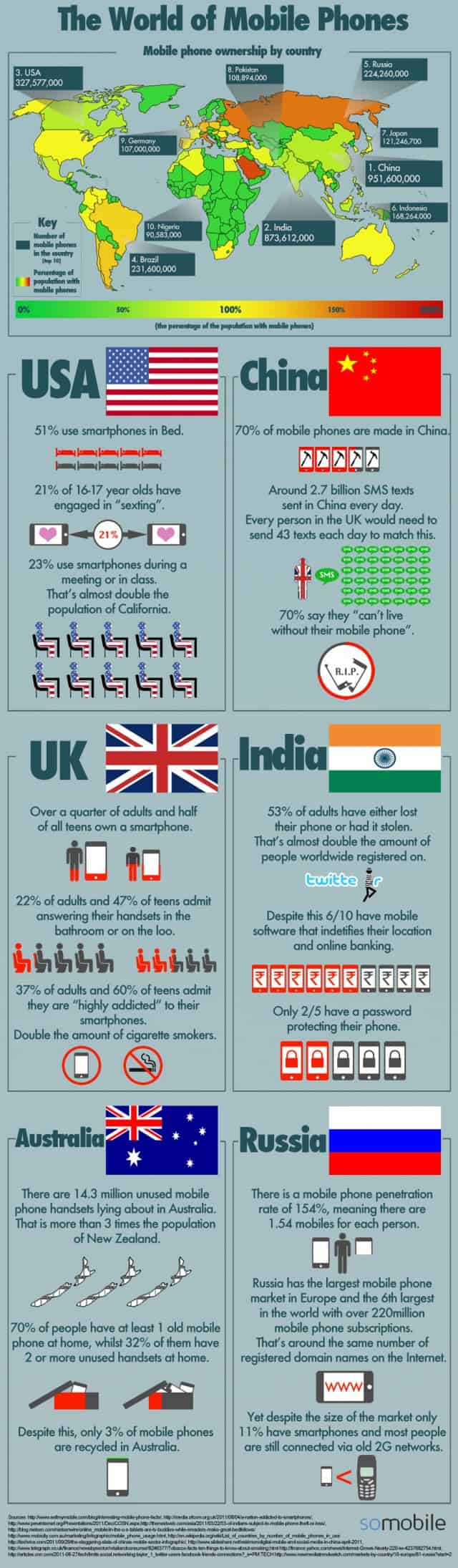
Prepaid: 10 Mobile Payments Infographics You Should View Today

Covering the mobile payments beat, we've tracked down 10 great infographics we think might be useful for the Prepaid industry:


1. An overview of the 5 Main Types of Mobile Payments:

The most important mobile payment infographic. Ever.
 
Compliments of MobilePaymentsToday.com

2. Mobile Payments Forecast

via mobinable


3. Will NFC Technology Drive Mobile Payments Initiatives?

via bostinno
4. The Value of Mobile Payments

via visual.ly


5. Global Trends

via Gigaom

6.  Market Size

via Mobinable


7. The Mobile Payment Revolution vis a vis Processing

via Onlinemarketing-trends
8. Who's who is the contactless space

via Mobilefiblog


9. Demographics

via Onlinemarketing-trends

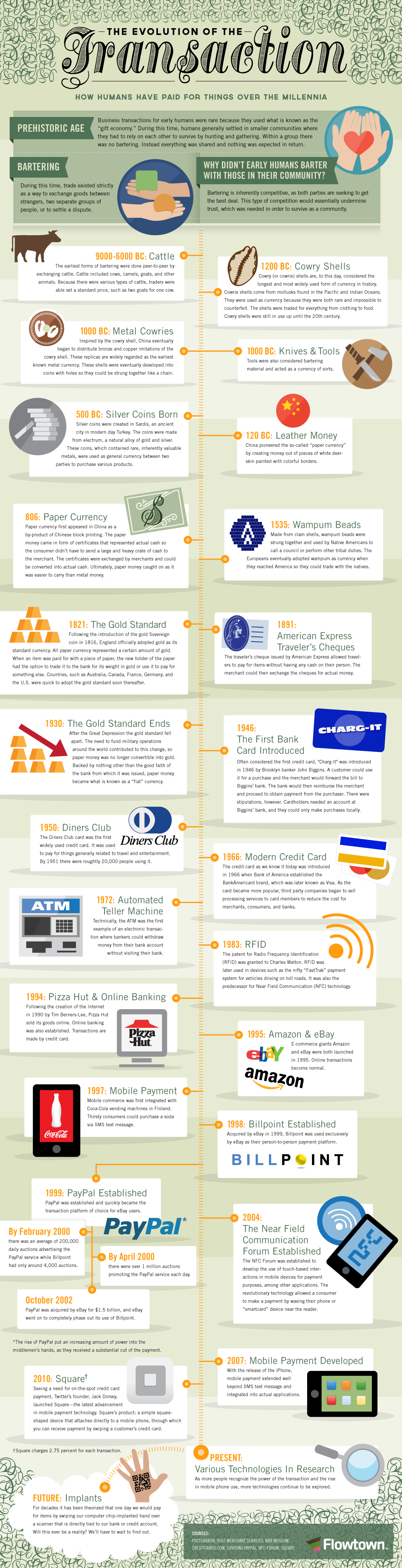
10. A retrospective of payment  transaction throughout history

via  Paylane


Share this article with your social network, just click below to share now!


Wednesday, November 12, 2008

Holiday online spending

At the Ecommerce Journal, research shows that one in five transactions online this holiday season will use an alternative payment process such as PayPal, eBill Me, prepaid cards or other online services. The total amount of money that is expected to be spent this way is $7.8 billion, or 18% of the $42.8 billion projected this holiday season.


Share this article with your social network, just click below to share now!


Monday, August 4, 2008

Paypal Releases Prepaid Debit Card

Marketing Week reports that Ebay’s online payment provider Paypal is launching a prepaid debit card with Visa and the Royal Bank of Scotland.

The Paypal Top Up Card can be used anywhere Visa is accepted. Paypal is targeting the card primarily to consumers who sell online since it enables them to spend the balances of the Paypal accounts offline. The card will cost £4.95 and can be reloaded at Post offices and Paypal retail outlets. This launch comes after Paypal’s release of their credit card in 2006.


Share this article with your social network, just click below to share now!