Showing posts with label iPhone. Show all posts

Monday, May 4, 2015

Apple Pay announces partnership with Best Buy

Apple CEO Tim Cook announced on Monday the 27th of April that Best Buy will begin accepting Apple Pay in its iOS app. The announcement also revealed that Apple Pay support will soon after be in Best Buy stores later this year. This means that Best Buy is now the first big-name U.S. retailer that has gone against the trend of retailers who are members of the MCX program.

Barry Blackburn / Shutterstock.com
The MCX program is a group of retailers and food chains that are currently in the process of constructing a payment app named CurrentC that is seen to be a likely rival to Apple Pay. CurrentC, which is expected to be launched later in 2015 will use barcodes rather than NFC for payments and is currently still in the testing phase. MCX CEO Dekkers Davidson has insisted that there are no fines or payments for leaving the program. However due to exclusivity agreements signed by Best Buy, they will not be able to be able to utilise Apple Pay until the agreement has run its course as MCX members cannot use CurrentC and Apple Pay simultaneously.

Despite this recent news, Scott Rankin, the MCX COO, has insisted that Best Buy are still “a strong MCX partner and supporter of the CurrentC initiative.”. He goes onto state that “we are of the firm belief that there need to be at least two to three major players within the mobile payments ecosystem for it to succeed. We remain steadfast and passionate about CurrentC, as well as completely focused on delivering the best mobile commerce solution for our merchant partners and consumers.”A Best Buy spokeswoman however stated that “We remain invested in MCX” but would not commit to accepting CurrentC when it launches to the public.

Denys Prykhodov / Shutterstock.com
The MCX consortium has the goal of creating a mobile wallet that includes payments methods that are less expensive for merchants to process than more traditional big-name credit cards. Apple Pay on the other hand is more favourable toward traditional debit and credit accounts. The system does not support cheaper store-branded cards and bank account hook ups. The system allows people with the newer models of the iPhone to make purchases in stores by placing their Apple Watch or phone near the checkout terminal. This eliminates the need for cash or cards and also is useful for online purchases. It will mean there is no need for the hassle of typing in credit card and shipping info for each online purchase. The phone or watch’s fingerprint identification technology aids in securing the transaction.

This partnership is a big one for Apple as MCX gained support from CVS and Rite Aid when they turned off Apple Pay in their stores. It’s not currently clear whether other MCX members may follow the lead of Best Buy and move to Apple Pay and thus not placing their trust in the CurrentC initiative. The test is whether customers embrace the Apple Pay system and can be convinced that paying with a phone or Apple Watch is easier and more convenient than cash and cards.

About the Author: Harry Kempe, a marketing intern at IIR USA, who works on various aspects of the industry including social media, marketing analysis and media. He is a recent graduate of Newcastle University who previously worked for EMAP Ltd. and WGSN as a marketing assistant on events such as the World Architecture Festival, World Retail Congress and Global Fashion Awards. He can be reached at hkempe@IIRUSA.com


Share this article with your social network, just click below to share now!


Tuesday, November 18, 2014

With the Holidays Coming Up, Most Retailers are Gearing Up for the Biggest Day of the Year: Black Friday

At the APEX offices, we are keeping a close watch on the payments-fueled technology retailers will use to gain traction with shoppers. Because the 2013 season was not the monster hit for retailers (according to Forbes), the pressure is on to lure shoppers away from the turkey on the table.

Our bet? Retailers will deploy more mobile coupons, geolocations/beacons and context-aware technology.


These immersive technologies are a huge opportunity to (literally) point customers toward certain deals or products, incentivize them with time-sensitive door-busters, reap data on customers’ movements during the rush and make customers’ lives easier.

There is a lot of promise in this technology. APEX recently tried the Snip Snap-powered beacon app at Lord &Taylor’s Manhattan flagship, where beacons stationed by the shoe department and Alex + Ani jewelry display populated our iPhones with offers, product information and details on new facets of the store layout, including Birdcage, a new store-within-a-store concept on the 2nd floor.

Picture the throngs of shoppers who line up before sunrise (or immediately after Thanksgiving dinner) to shop. Imagine that captive audience plotting their shopping mission by scrolling through the app while they are waiting in line. Pair that with easy-to-clip mobile coupons, and deals exclusive to the app and you have a recipe for bigger basket sizes, and increased engagement and richer customer data.

We anticipate that these trends will be in use for the rest of the year – not just on Black Friday. (All the better to lengthen the shopping season, right?)

At APEX, you’ll  hear direct from the retailers deploying this technology, as well as the entrepreneurs pioneering new ways for retailers and shoppers to virtually interact – including the CEO of SnipSnap and the former VP of Corporate Strategy for Lord & Taylor. Download the full agenda here.


Share this article with your social network, just click below to share now!


Thursday, August 15, 2013

Five Ways Traditional Banks are Missing Millennials

Over 80 million strong, millennials rival baby boomers in their numbers.  Their purchases already account for a little over  one out of every five dollars spent on consumer goods and services.  And in just over five years they will hit their peak and become a defining force in the US economy.

This me generation matured along with digital technology.  The oldest of them remember dial up modems and the youngest were still in high school when the iPhone debuted.  But all are quick to latch onto the latest innovations, often disrupting entire industries (bye bye, old media).  For banks the impact has so far been manageable, but at Moven we believe all of that is about to change.

Equipped with smart-phones millennials now navigate their social, physical and even service environments in completely brand new ways.  In particular, the rise of mobile applications has fundamentally redefined how they find, select and purchase services.  Traditional banks are missing this shift towards "appification", where constant experimentation and innovation is the new norm.  And while the landscape is changing around them, there are five key principles that they've missed:

1. Download the App
An app is easy to download and set up.  A bank account, not so much.  Whereas the best apps can have millions of users in a very short time, banks struggle to achieve single digit account growth.  Without a streamlined mobile account signup, the app discovery and trial behaviors that millennials love is impossible with banks.

2. Share with Friends
Millennials look to their friends and peer groups for recommendations and are quick to share when pleased.  If getting an app takes minutes, it's far easier to champion the brand.  The best apps go further, creating shareable moments  that complement millenials' own personal social brand.

3. Get Instant Insights
As with a bank relationship, apps are all about usage and retention.  And when it comes to making money decisions, millenials want insights at their fingertips.  Foursquare tells me where my friends are, Yelp how good the food will be, and Google the fastest way to get there.  But what does my bank app do?  My balance is a start, but certainly not the end.  At Moven we've created MoneyPulse™, a real time analysis of your spend compared to your goals, but there's room for lots more experimentation by banks.

4. Be Financial Healthy
Entering the workforce during this great recession with heavy student debt, millenials are making very different money decisions.  Whether it be living at home, buying fewer cars, and even postponing marriage, many are trying to be better savers.  But while the intent is there, the behavior is not as they dedicate more of their spend towards smaller discretionary items.  Traditional banks have yet to tap into this financial angst and provide meaningful, effective solutions that fit the new "appified" service paradigm that millennials prefer.

5. Trust Us
Finally, millenials are extremely skeptical of banks.  It's not that they're unwilling to pay for services, but that they expect banks to take every opportunity to exploit them (cue occupy wall street).  The increasing appeal of prepaid cards in this segment signals their willingness to choose consistency and transparency over hidden fees and the temptation of greater debt.  While banks are moving towards this, they can go even further by committing to an oath, as we have done, assuring customers that their best interests always come first.


Mohamed Khalil, Head of Product, Data & Partnerships at Moven, has over 15 years of experience in financial services management consulting, fintech startups, and retail brokerage and bank strategy.  He has an undergraduate degree from Princeton University and an MBA from Wharton. Moven is a startup dedicated to providing mobile money management services that help consumers spend, save and live smarter.  Moven was awarded a Best in Show at the 2013 Finovate London event.


Share this article with your social network, just click below to share now!


Wednesday, January 30, 2013

The NFC Solution for the iPhone


The iPhone may not be NFC-enabled, but some payment players are trying to change that. U.S. Bancorp has been testing a touch-to-pay technology for iPhone users. The NFC-enabling technology is built into the smartphone case. This is big news for iPhone users, especially as the iPhone has not yet been equipped with NFC technology.
For iPhone customers, this opens up a new form of tap-and-go payment. Niti Badarinath, U.S. Bank's digital strategy and mobile banking head, said in an interview last year that he views mobile payments as "the next frontier."
NFC has been under fire from several players in the payments ecosystem, includingPayPal. But this latest move shows that there are many industry players who believe in NFC. With the market share for iPhones in the U.S. at 32%, will this NFC-equipped case change the game for NFC proponents?
Join us at the Prepaid Expo in March where industry experts from Giftango, Visa, Blackhawk, Oberthur Technologies and many others will be discussing the future of NFC, mobile wallets and other emerging technologies.


ABOUT THE AUTHOR

Ryan Geswell is a New Media Analyst in the Finance Division at IIR USA with a background in Marketing and Media. He can be reached at rgeswell@iirusa.com.


Share this article with your social network, just click below to share now!


Monday, January 14, 2013

Predictions on Apple as the Wallet War Continues to Pick up Steam

Industry insiders scrutinize Apple’s every movement: Most recently up for debate was Apple’s wallet debut with Passbook, as well as the revelation that the iPhone 5 would not support NFC.

Apple plays its cards pretty close to the chest, but one industry analyst predicts that the company is revving up for the mobile payments race in a big, big way.

According to Investors.com, Dan Perlin, a RBC Capital analyst, predicts that Apple is likely to launch a closed-loop loyalty program dubbed iPoints. Perlin thinks Apple will be able to leverage the 400 million card accounts already on file with iTunes to build a payments and loyalty program.

NFC
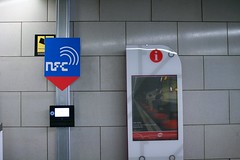
NFC (Photo  nicolasnova)
 “This could give Apple an edge over other emerging mobile payment systems such as Google, Square, and eBay’s PayPal unit,” Perlin told Investors.com.

Apple’s acquisition of AuthenTec in April 2012 suggests that the next generation iPhone, the 5S (set to be released in June) will be equipped with NFC – only adding to the buzz. For more on this story and full article from investor.com click here

Do you think Apple is planning a major entry into the payments space this year? Is this Apple’s attempt to try the same closed-loop, loyalty-based system Starbucks has created? 

At Prepaid Expo this March, there will be plenty of time to debate these new movements in the mobile payments war, including insights from Patrick Gauthier, Head of Product Strategy & Business Operations, Retail Services at PayPal and an on-stage debate on the future of the payments ecosystem with American Express, Green Dot, MasterCard and InComm.

ABOUT THE AUTHOR

Ryan Geswell is a New Media Analyst in the Finance Division at IIR USA with a background in Marketing and Media. He can be reached at rgeswell@iirusa.com.
Enhanced by Zemanta


Share this article with your social network, just click below to share now!


Friday, October 12, 2012

Disruption from Mobile Extends Beyond App Downloads


The smartphone market, as an outgrowth of the PC market with several of the same leading brands carried over—most notably Apple and perhaps soon, Microsoft—is big on specifications. Screen sizes, storage capacity and, since the App Store was unveiled a few years ago, the number of apps available for download on a given platform. In Apple’s digital marketplace alone, the original App Store, more than 650,000 apps are now available.

Thousands more are available for Android users—through both Google Play and Amazon, and Microsoft is slowly building its market with thousands of apps for Windows Mobile, as well. Add in the staggering number of actual downloads—more than a billion per month on Apple devices alone—and large numbers dominate the mobile conversation.

But lost in the numbers is the impact of the transition to mobile. Certain uses of these devices have a significant effect on some industries, especially retail and commerce. Looking at a few apps currently on the market is a glimpse of the seismic changes ahead as mobile apps simultaneously become increasingly advanced and ubiquitous.

For example, every retailer’s worst nightmare came true when a startup app developer named Occipital released its iPhone app, RedLaser, in 2008. RedLaser, now part of eBay and available on multiple platforms, scans barcodes using the camera of a smartphone and queries competing retailers for price comparisons. The already slim margins of retailers shrink to nothing when customers stroll the aisles doing instant price comparisons that would have beeen impossible only a few years ago.

"Brands and their retail partners must adjust to the reality that in the new mobile world, no one truly shops alone." —Joe DeSetto

But miniaturized margins are only the beginning of retailers’ concerns. When you barcode scan toys this Christmas, one of the retailers most likely to appear is, of course, Amazon. To date, local retailers held one serious advantage over Amazon—immediate gratification. Even if Amazon could beat a local store on price, many customers won’t wait three to five days for the FedEx truck.

But what happens when you combine mobile scanning with same-day delivery? We may be about to find out. In several cities across the United States, Amazon is beginning to roll out this option as it builds large distribution centers within a few hours drive of millions of customers. The time is drawing near that customers in a retail location could scan a product, order from Amazon right on their phones with a credit card on file and still have the product a few hours after the day’s errands are finished.

While this bit of futurism won’t immediately spread to everyone and requires Amazon to build out even more infrastructure than it currently has in place, the secondary effect of customers shopping with mobile apps in tow has already taken hold. Mobile devices are great for research. As such, not just rewards and price comparisons are a tap away, but product reviews, how-to videos, the friend on Facebook with an opinion on everything, and other sources of hard facts and completely subjective impressions.

Brands and their retail partners must adjust to the reality that in the new mobile world, no one truly shops alone. The brand’s j-hook displays are no longer the only connection to the customer. Smart brands must now consider how mobile devices at every step of the customer interaction will significantly change behavior, as their customers will be looking to their phones as a source of information, opinion, prices and promotions. Thousands of apps are out there, but the truth is that users with only a few apps installed on their phones still disrupt industries in new and surprising ways.

* Republished with permission from Paybefore, as published September 2012.

ABOUT THE AUTHOR

Joseph DeSetto is Paybefore’s emerging payments blogger and program manager of the Mobile Development Bachelor of Science degree at Full Sail University. He is the author of The Business of Design and previously served as chief technology officer for two mobile startups.

Paybefore™ is the leading provider of information to the prepaid industry. 


Share this article with your social network, just click below to share now!


Wednesday, September 19, 2012

How Restaurant Technology Innovation is Driving Revenue


A MenuPad, a new application used for ordering
 meals and wine and even paying the check. 
(Source: bizjournals.com)
The ecosystem of the restaurant experience is ever evolving. As technology advances, and customer habits grow increasingly impatient, diners are continuously seeking methods to streamline the interactions they may encounter as they search for their next meal. Businesses on the low tech side of the spectrum have begun to reevaluate the restaurant  recommendation revolution to drive revenue. 

While the main source of traffic to new restaurants are derived through word of mouth or favorable mention from friends and family, diners are now embracing a modernized approach when they consider to experiment with a new restaurant experience.

In the information age, knowledge and research are vital in making informed decisions. For many smartphone wielders, Yelp is no stranger and has become an essential tool. In Q2 2012, Yelp received traffic of 78 million unique visits, while users contribute 30 million reviews. Of these reviews 23% consist of restaurants.

The research phase continues with a wide array of websites and apps that have painstakingly collected, organized, and made available large catalogs of menus from surrounding restaurants. MenuPages collect and update thousands of menus (monthly) from nearly 30,000 restaurants in eight major markets. The interface is clean and simple while provides filters such as neighborhoods, price ranges, take out and list of other features. MenuPages also features the option to order directly through Seamless, the largest online food ordering company.

While the majority of restaurants accept walk-ins, operating the back of house becomes much less of a wild card if patrons develop the habit of making reservations before they dine. Digital reservation services, such as OpenTable, have streamlined the process to book your table for available time slots. A one-two combination partnership with Yelp, OpenTable is the reigning champion in the digital reservation service for restaurants. Having grown their customer base to over 13,000 restaurants in 50 states and multiple countries, it is hard to imagine there would be an emerging challenger. 

SeatMe, a San Francisco startup, has begun to step up to the plate and take a bite of that market share. SeatMe allows management of reservations, guests, and staff floor plans straight from a tablet or smart device. SeatMe’s guestbook also tracks unique schedules, performances, and tastes with nice design, easy usability, and good integration. SeatMe does not provide a stark distinction from OpenTable, but there are a host of differences as an alternative to look out for.

The inaction of waiting in line to be seated has even taken a turn for the tech as select restaurants have adopted a waiting list management system. NoWait is a Pittsburgh based startup that has developed an iPad app where customers may leave a name and number with the front of house, or host, and opt into receiving a text message when their table is ready. Customers can also check their status in line through a provided link via text message where they can access, “What’s My Place”, in the line. Acceptance of the NoWait system ideally organizes hosting duties in a manner where customers can inquire where there their position is in line without inundating the host or hostess with line status updates.

Once seated, the item selection has also stepped in to the technology retrofit. Restaurants are opting to do away with physical paper menus with tablet and smart device interfaces. Plate replaces a paper wine list or entire menu with a software format displayed on tablets. These “smart menus” are fully customizable to restaurants that have adopted the Plate platform, and can display notes, photos, and even pairings of particular wines to food items. Plate reports that with a few extra minutes playing with the menu can increase a diner’s order by 10-15%. 

For restaurants with a budget and cannot afford to distribute upwards of 10 tablets at any given time, SecondMenu offers a similar experience. Instead SecondMenu presents a restaurant's menu through the diner’s own smartphone. The SecondMenu web app is not activated via native apps which must be downloaded from an app store; rather it is through visiting secondmenu.com/restaurantsname or more easily in the form of a QR code.

Alternative payment methods have also managed to make its mark in efforts to accelerate the checkout process. With increasing support for NFC, or Near Field Communication, customers can simply tap their smart devices or use an app to pay using Google Wallet, PayPal, LevelUp, Square, or a slew of emerging payment services. Experimentation with BitCoin has also been recorded, in such with a restaurant in Berlin. Room 77, located in Berlin, serves Southwestern American fare, from burgers to burritos. The decors of the restaurant are reflections of a Texan steakhouse that we are all familiar with. 

One differentiation that Room 77 has over any other restaurant in Germany is that it is the only restaurant in Germany that accepts BitCoin. “When someone pays with by Bitcoin, either through a computer or smart phone, the Bitcoin is sent encrypted to ensure it can't be hacked. There are no transaction fees, and you can exchange a Bitcoin for real currency.”

There are a wide array of tools and new technology to incorporate in order to excite customers, while also differentiating your restaurant from conventional competitors. Adopting new methods to streamline management, or keep customers engaged, can improve the overall dining experience for patrons as well as the staff.

About the Author

Phil Ng is a Social Media Analyst at IIR USA with a specialized focus on technology and technology culture. He may be reached at PNg@iirusa.com.


Share this article with your social network, just click below to share now!


Monday, August 20, 2012

Cashless Squares Up At Starbucks

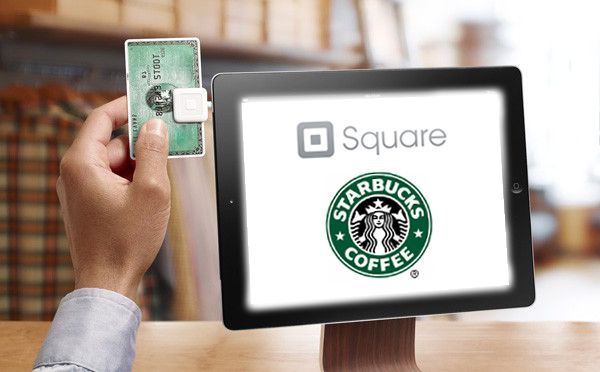
(Photo: BetaNews.com)
A typical encounter at the cash register consists of either fumbling with cash and change, or pulling out your credit card, swipe it, wait for an authorization, followed by a signing of a console or receipt. An alternative payment method has been emerging in small, and micro, businesses. 

These alternative payment methods will be more apparent in coming months as a big deal has been struck by caffeine distribution giant, Starbucks, and mobile payment startup, Square.

In early August, Starbucks has struck a deal and will be investing $25 million to outfit a network of 7000 participating stores with the mobile payment system, Square. Howard Schultz, CEO of Starbucks, notes that, “the smartphone is the primary device in our lives.” This deal will provide Starbucks with a significant discount on credit card processing fees. Traditional credit card processing methods required businesses to pay the credit card company 2.5-5% plus equipment rental and usage charges. Square on the other hand charges a flat 2.75% with free equipment, in the form of a dongle that attaches via headphone jack on any smartphone or tablet.

In 2009, Jack Dorsey, founder of Twitter, took a leap in to innovating the mobile payment space. With a simple philosophy, “everyone should be able to accept credit cards. It should be easy and free to get set up, it should use simple technology people already own, and, most importantly, it should instantly adapt to any size business”.

Square consists of four major components: a card reader, Pay With Square app, Square Register, and a Square Card Reader. The card reader is a plastic device which plugs into the audio jack of an iPhone, iPod Touch, iPad and Android based mobile phones. This allows any smartphone to be used as a credit card swiping machine. Pay With Square is an app which allows customers check in a Square enabled business and set up tabs and pay with their names. It also enables them to receive electronic receipts. The Square Register is available for the iPad and transforms it into a credit card management system. Square Card Reader is another app available free of cost for iOS and Android, and is the actual interface that is utilized by the business to manage payments made via the card reader or Pay With Square app.

Previously focused around aiding small and micro businesses, with this $25 million investment from Starbucks, Square has raked in $200 million in new funding, positioning Square with a $3.25 billion valuation. As of March, Square has processed $4 billion a year in mobile payments transactions in this year alone through its 1 million registered merchants. 

With well-established companies, such as PayPal, Google Wallet, Intuit, LevelUp, and dozens others, fighting to gain market share in the space of mobile payments, the addition to the 7000 stores that have been added through the Starbucks deal, Square has taken a huge lead ahead of their growing field of competition.

The exposure provided through Starbucks to spotlight an seamless alternative payment method will greatly expand the emerging cashless zeitgeist. Expect to see more alternative payment methods at an ever growing number businesses, from your corner store to one of the thousands of Starbucks coffee shops.

About the Author


Phil Ng is a Social Media Analyst at IIR USA with a specialized focus on technology and technology culture. He may be reached at PNg@iirusa.com.


Share this article with your social network, just click below to share now!


Friday, June 4, 2010

iPhone and iPad Users Send and Receive Money with Prepaid MasterCard

This post on PCWorld highlights how MasterCard's new MoneySend application will allow iPad and iPhone users to send and receive money using the phone or tablet. For the time-being, the application will only work in the US and payments can range from paying a babysitter to paying back loans.

In order for MoneySend to work it has to be linked to a compatible prepaid account and users will also need a mobile phone number. There are a lot of opportunities in the mobile money space and it seems like companies are finally starting to understand this concept. Looking forward to seeing what else is in store for mobile users!


Share this article with your social network, just click below to share now!


Wednesday, December 3, 2008

iPhone App can personalize giftcards

At All Pay News, they reveal a new iPhone/iTouch app that allows users to select, personalize and purchase gift cards without leaving the application.

Gary Krow, Chief Executive Officer of GiftCertificates.com had this to say about the new App:
"GiftCertificates.com is all about the freedom of choice, and delivering superior value and service to our customers, especially during the holiday season. By making it easier for our customers to access the GiftCertificates.com marketplace, the GiftCards application enhances our customers' online shopping experience and positions us to better serve them in the mobile future."


Share this article with your social network, just click below to share now!