Showing posts with label Apple. Show all posts

Monday, May 4, 2015

Apple Pay announces partnership with Best Buy

Apple CEO Tim Cook announced on Monday the 27th of April that Best Buy will begin accepting Apple Pay in its iOS app. The announcement also revealed that Apple Pay support will soon after be in Best Buy stores later this year. This means that Best Buy is now the first big-name U.S. retailer that has gone against the trend of retailers who are members of the MCX program.

Barry Blackburn / Shutterstock.com
The MCX program is a group of retailers and food chains that are currently in the process of constructing a payment app named CurrentC that is seen to be a likely rival to Apple Pay. CurrentC, which is expected to be launched later in 2015 will use barcodes rather than NFC for payments and is currently still in the testing phase. MCX CEO Dekkers Davidson has insisted that there are no fines or payments for leaving the program. However due to exclusivity agreements signed by Best Buy, they will not be able to be able to utilise Apple Pay until the agreement has run its course as MCX members cannot use CurrentC and Apple Pay simultaneously.

Despite this recent news, Scott Rankin, the MCX COO, has insisted that Best Buy are still “a strong MCX partner and supporter of the CurrentC initiative.”. He goes onto state that “we are of the firm belief that there need to be at least two to three major players within the mobile payments ecosystem for it to succeed. We remain steadfast and passionate about CurrentC, as well as completely focused on delivering the best mobile commerce solution for our merchant partners and consumers.”A Best Buy spokeswoman however stated that “We remain invested in MCX” but would not commit to accepting CurrentC when it launches to the public.

Denys Prykhodov / Shutterstock.com
The MCX consortium has the goal of creating a mobile wallet that includes payments methods that are less expensive for merchants to process than more traditional big-name credit cards. Apple Pay on the other hand is more favourable toward traditional debit and credit accounts. The system does not support cheaper store-branded cards and bank account hook ups. The system allows people with the newer models of the iPhone to make purchases in stores by placing their Apple Watch or phone near the checkout terminal. This eliminates the need for cash or cards and also is useful for online purchases. It will mean there is no need for the hassle of typing in credit card and shipping info for each online purchase. The phone or watch’s fingerprint identification technology aids in securing the transaction.

This partnership is a big one for Apple as MCX gained support from CVS and Rite Aid when they turned off Apple Pay in their stores. It’s not currently clear whether other MCX members may follow the lead of Best Buy and move to Apple Pay and thus not placing their trust in the CurrentC initiative. The test is whether customers embrace the Apple Pay system and can be convinced that paying with a phone or Apple Watch is easier and more convenient than cash and cards.

About the Author: Harry Kempe, a marketing intern at IIR USA, who works on various aspects of the industry including social media, marketing analysis and media. He is a recent graduate of Newcastle University who previously worked for EMAP Ltd. and WGSN as a marketing assistant on events such as the World Architecture Festival, World Retail Congress and Global Fashion Awards. He can be reached at hkempe@IIRUSA.com


Share this article with your social network, just click below to share now!


Monday, February 4, 2013

Where Do YOU Think Prepaid and Payments are Headed?

The Prepaid Expo and the Mercator Advisory Group have co-authored a prepaid industry attitudinal survey. Respondents from across the entire prepaid industry will be able to voice their opinion on where they feel prepaid is headed. 


You can participate in the survey here or scan the QR code. The survey has been divided into two separate paths, with tailored questions for GPR players and closed-loop players. Participants will be entered to win a 16GB iPad with retina display.

Results from this survey will be revealed at the Prepaid Expo this March – as well as the winner of the iPad. Data from the survey is exclusive data that you will not be able to find anywhere else. You do not want to miss the opportunity for exclusive industry insights. Click here to register for the Prepaid Expo.

Enhanced by Zemanta


Share this article with your social network, just click below to share now!


Monday, January 14, 2013

Predictions on Apple as the Wallet War Continues to Pick up Steam

Industry insiders scrutinize Apple’s every movement: Most recently up for debate was Apple’s wallet debut with Passbook, as well as the revelation that the iPhone 5 would not support NFC.

Apple plays its cards pretty close to the chest, but one industry analyst predicts that the company is revving up for the mobile payments race in a big, big way.

According to Investors.com, Dan Perlin, a RBC Capital analyst, predicts that Apple is likely to launch a closed-loop loyalty program dubbed iPoints. Perlin thinks Apple will be able to leverage the 400 million card accounts already on file with iTunes to build a payments and loyalty program.

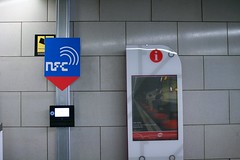
NFC
NFC (Photo  nicolasnova)
 “This could give Apple an edge over other emerging mobile payment systems such as Google, Square, and eBay’s PayPal unit,” Perlin told Investors.com.

Apple’s acquisition of AuthenTec in April 2012 suggests that the next generation iPhone, the 5S (set to be released in June) will be equipped with NFC – only adding to the buzz. For more on this story and full article from investor.com click here

Do you think Apple is planning a major entry into the payments space this year? Is this Apple’s attempt to try the same closed-loop, loyalty-based system Starbucks has created? 

At Prepaid Expo this March, there will be plenty of time to debate these new movements in the mobile payments war, including insights from Patrick Gauthier, Head of Product Strategy & Business Operations, Retail Services at PayPal and an on-stage debate on the future of the payments ecosystem with American Express, Green Dot, MasterCard and InComm.

ABOUT THE AUTHOR

Ryan Geswell is a New Media Analyst in the Finance Division at IIR USA with a background in Marketing and Media. He can be reached at rgeswell@iirusa.com.
Enhanced by Zemanta


Share this article with your social network, just click below to share now!


Friday, October 12, 2012

Disruption from Mobile Extends Beyond App Downloads


The smartphone market, as an outgrowth of the PC market with several of the same leading brands carried over—most notably Apple and perhaps soon, Microsoft—is big on specifications. Screen sizes, storage capacity and, since the App Store was unveiled a few years ago, the number of apps available for download on a given platform. In Apple’s digital marketplace alone, the original App Store, more than 650,000 apps are now available.

Thousands more are available for Android users—through both Google Play and Amazon, and Microsoft is slowly building its market with thousands of apps for Windows Mobile, as well. Add in the staggering number of actual downloads—more than a billion per month on Apple devices alone—and large numbers dominate the mobile conversation.

But lost in the numbers is the impact of the transition to mobile. Certain uses of these devices have a significant effect on some industries, especially retail and commerce. Looking at a few apps currently on the market is a glimpse of the seismic changes ahead as mobile apps simultaneously become increasingly advanced and ubiquitous.

For example, every retailer’s worst nightmare came true when a startup app developer named Occipital released its iPhone app, RedLaser, in 2008. RedLaser, now part of eBay and available on multiple platforms, scans barcodes using the camera of a smartphone and queries competing retailers for price comparisons. The already slim margins of retailers shrink to nothing when customers stroll the aisles doing instant price comparisons that would have beeen impossible only a few years ago.

"Brands and their retail partners must adjust to the reality that in the new mobile world, no one truly shops alone." —Joe DeSetto

But miniaturized margins are only the beginning of retailers’ concerns. When you barcode scan toys this Christmas, one of the retailers most likely to appear is, of course, Amazon. To date, local retailers held one serious advantage over Amazon—immediate gratification. Even if Amazon could beat a local store on price, many customers won’t wait three to five days for the FedEx truck.

But what happens when you combine mobile scanning with same-day delivery? We may be about to find out. In several cities across the United States, Amazon is beginning to roll out this option as it builds large distribution centers within a few hours drive of millions of customers. The time is drawing near that customers in a retail location could scan a product, order from Amazon right on their phones with a credit card on file and still have the product a few hours after the day’s errands are finished.

While this bit of futurism won’t immediately spread to everyone and requires Amazon to build out even more infrastructure than it currently has in place, the secondary effect of customers shopping with mobile apps in tow has already taken hold. Mobile devices are great for research. As such, not just rewards and price comparisons are a tap away, but product reviews, how-to videos, the friend on Facebook with an opinion on everything, and other sources of hard facts and completely subjective impressions.

Brands and their retail partners must adjust to the reality that in the new mobile world, no one truly shops alone. The brand’s j-hook displays are no longer the only connection to the customer. Smart brands must now consider how mobile devices at every step of the customer interaction will significantly change behavior, as their customers will be looking to their phones as a source of information, opinion, prices and promotions. Thousands of apps are out there, but the truth is that users with only a few apps installed on their phones still disrupt industries in new and surprising ways.

* Republished with permission from Paybefore, as published September 2012.

ABOUT THE AUTHOR

Joseph DeSetto is Paybefore’s emerging payments blogger and program manager of the Mobile Development Bachelor of Science degree at Full Sail University. He is the author of The Business of Design and previously served as chief technology officer for two mobile startups.

Paybefore™ is the leading provider of information to the prepaid industry. 


Share this article with your social network, just click below to share now!


Wednesday, February 4, 2009

iTunes Gift Cards Stand Out

This recent post on Philly.com highlights that gift cards were number one on consumers’ wish lists during the 2008 holiday season according to the National Retail Federation. The most sought out gift card this year, which comes as no surprise, is the iTunes gift card. Many believe that gift cards are not personal enough, but consumers seem to disagree. It is estimated that 36 percent of all iTunes purchases come from gift cards, and that number climbs to 61 percent for teen consumers.

It will be interesting to see if other companies can create a similar demand for their prepaid cards as Apple has done with the iTunes gift cards.


Share this article with your social network, just click below to share now!