Wednesday, September 19, 2012

How Restaurant Technology Innovation is Driving Revenue


A MenuPad, a new application used for ordering
 meals and wine and even paying the check. 
(Source: bizjournals.com)
The ecosystem of the restaurant experience is ever evolving. As technology advances, and customer habits grow increasingly impatient, diners are continuously seeking methods to streamline the interactions they may encounter as they search for their next meal. Businesses on the low tech side of the spectrum have begun to reevaluate the restaurant  recommendation revolution to drive revenue. 

While the main source of traffic to new restaurants are derived through word of mouth or favorable mention from friends and family, diners are now embracing a modernized approach when they consider to experiment with a new restaurant experience.

In the information age, knowledge and research are vital in making informed decisions. For many smartphone wielders, Yelp is no stranger and has become an essential tool. In Q2 2012, Yelp received traffic of 78 million unique visits, while users contribute 30 million reviews. Of these reviews 23% consist of restaurants.

The research phase continues with a wide array of websites and apps that have painstakingly collected, organized, and made available large catalogs of menus from surrounding restaurants. MenuPages collect and update thousands of menus (monthly) from nearly 30,000 restaurants in eight major markets. The interface is clean and simple while provides filters such as neighborhoods, price ranges, take out and list of other features. MenuPages also features the option to order directly through Seamless, the largest online food ordering company.

While the majority of restaurants accept walk-ins, operating the back of house becomes much less of a wild card if patrons develop the habit of making reservations before they dine. Digital reservation services, such as OpenTable, have streamlined the process to book your table for available time slots. A one-two combination partnership with Yelp, OpenTable is the reigning champion in the digital reservation service for restaurants. Having grown their customer base to over 13,000 restaurants in 50 states and multiple countries, it is hard to imagine there would be an emerging challenger. 

SeatMe, a San Francisco startup, has begun to step up to the plate and take a bite of that market share. SeatMe allows management of reservations, guests, and staff floor plans straight from a tablet or smart device. SeatMe’s guestbook also tracks unique schedules, performances, and tastes with nice design, easy usability, and good integration. SeatMe does not provide a stark distinction from OpenTable, but there are a host of differences as an alternative to look out for.

The inaction of waiting in line to be seated has even taken a turn for the tech as select restaurants have adopted a waiting list management system. NoWait is a Pittsburgh based startup that has developed an iPad app where customers may leave a name and number with the front of house, or host, and opt into receiving a text message when their table is ready. Customers can also check their status in line through a provided link via text message where they can access, “What’s My Place”, in the line. Acceptance of the NoWait system ideally organizes hosting duties in a manner where customers can inquire where there their position is in line without inundating the host or hostess with line status updates.

Once seated, the item selection has also stepped in to the technology retrofit. Restaurants are opting to do away with physical paper menus with tablet and smart device interfaces. Plate replaces a paper wine list or entire menu with a software format displayed on tablets. These “smart menus” are fully customizable to restaurants that have adopted the Plate platform, and can display notes, photos, and even pairings of particular wines to food items. Plate reports that with a few extra minutes playing with the menu can increase a diner’s order by 10-15%. 

For restaurants with a budget and cannot afford to distribute upwards of 10 tablets at any given time, SecondMenu offers a similar experience. Instead SecondMenu presents a restaurant's menu through the diner’s own smartphone. The SecondMenu web app is not activated via native apps which must be downloaded from an app store; rather it is through visiting secondmenu.com/restaurantsname or more easily in the form of a QR code.

Alternative payment methods have also managed to make its mark in efforts to accelerate the checkout process. With increasing support for NFC, or Near Field Communication, customers can simply tap their smart devices or use an app to pay using Google Wallet, PayPal, LevelUp, Square, or a slew of emerging payment services. Experimentation with BitCoin has also been recorded, in such with a restaurant in Berlin. Room 77, located in Berlin, serves Southwestern American fare, from burgers to burritos. The decors of the restaurant are reflections of a Texan steakhouse that we are all familiar with. 

One differentiation that Room 77 has over any other restaurant in Germany is that it is the only restaurant in Germany that accepts BitCoin. “When someone pays with by Bitcoin, either through a computer or smart phone, the Bitcoin is sent encrypted to ensure it can't be hacked. There are no transaction fees, and you can exchange a Bitcoin for real currency.”

There are a wide array of tools and new technology to incorporate in order to excite customers, while also differentiating your restaurant from conventional competitors. Adopting new methods to streamline management, or keep customers engaged, can improve the overall dining experience for patrons as well as the staff.

About the Author

Phil Ng is a Social Media Analyst at IIR USA with a specialized focus on technology and technology culture. He may be reached at PNg@iirusa.com.


Share this article with your social network, just click below to share now!


Wednesday, September 12, 2012

The Future of Alternative Payments

Research was conducted to figure out where exactly card-based e-commerce and alternative payments were going around the world. Whether it was trying to figure out if (when?) alternative payments will eclipse card-based e-commerce or whether new innovations would decrease or increase, the results of the study painted an interesting picture for the future. 


The research was conducted by Bain Capital and Advent projects that e-commerce transactions will grow at an annualized rate of14 percent from 2010 to 2015 rising from USD $942 billion. In addition to this, there is something that is somewhat staggering: Alternative payments are actually behind card based e-commerce. But not to worry about such numbers, alternative payments are expected to pass card based e-commerce by 2015. 
BERLIN, GERMANY - SEPTEMBER 05:  A patient pay...
BERLIN, GERMANY - SEPTEMBER 05: A patient pays a quarterly consultion fee while handing over her Allgemeine Ortskrankenkasse (AOK) health insurance card on September 5, 2012 in Berlin, Germany. ( Getty Images)

The US and UK have the highest amount of e-commerce penetration rates at 77 and 60 percent respectively. In Netherlands, e-commerce growth is underpinned by an electric payment called iDEAL. iDEAL allows people to make bank transfers without entering their credit or debit information online. WorldPay estimates that there are as many as 230 alternative payments providers. 

Some believe that there can be an AP provider which can challenge the established e-commerce players. They also predict that there will be growth a 50 percent a year annually in China and Poland. Among the developed nations, Japan is expected to have a growth of 20 percent. And with the growth of other nations, prepaid may take off in ways that would turn society into more a plastic card carrying world than it ever was before. 

About the Author

Adam Wells studies English at Pace University.


Share this article with your social network, just click below to share now!


Wednesday, September 5, 2012

Cashless Food Trucks

Have you ever wished that whenever you get something to eat at a stand or a truck on the side of the road, you wouldn't need cash to pay for your purchase? Wouldn’t you love to just use your debit or credit cards to pay for that two-dollar frank or fifteen-dollar lobster roll? 

Well, gourmet food trucks are now allowing the use of debit and credit cards. They are now equipped with tablets and smartphones for credit card payments and email receipts to paying customers. 


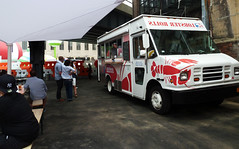
Red Hook Lobster Pound truck
Red Hook Lobster Pound truck (Photo: mediageek)
Global transaction will increase from $241 billion in 2011 to $1 trillion in 2015. Gourmet trucks used to be a cash only operation but with the prices and the times changing, it was only a matter of time for the use of credit cards. 

Gourmet trucks are using Square and with that attachment, the business can then accept the payment. The other fact that works with the usage of credit cards is that the business can adjust the state taxes accordingly. 

Red Hook Lobster Pound Truck is one of the trucks that are utilizing this aspect of card transactions. This allows the trucks to travel through each state and adjust the taxes. 

But one of the problems with accepting electronic payments is the wireless connection. The hope for trucks to combat the connectivity disadvantage is that carriers continue to improve 4G LTE networks. Even though NFC seems to have a bright future in the way people receive payments, there are downsides to it. A merchant must acquire NFC readers and consumers have to buy NFC-enabled phones. 

The efficiency of mobile payments is still improving but there is something there. Businesses can integrate their mobile-payment transactions with QuickBooks, which unifies bookkeeping. Of all the innovations that are moving from cash to plastic cards, who would've thought the last item that would be on the list would be a food truck?

The food truck concept is already a great convenience for someone who does not want to pay a whole lot of money (unless you want lobster rolls) and keep on going. But now that some truck owners are going to use modern devices so that you can now use your cards it is even better. 

About the Author

Adam Wells studies English at Pace University.


Share this article with your social network, just click below to share now!


Wednesday, August 29, 2012

Read the 2nd PEERS Issue: Mobile Review

Last month, we introduced you to the Prepaid Expo Executive Report Series (PEERS) here. PEERS is a series of summary briefs for prepaid business executives focused on key developments and topical hot spots driving prepaid industry change.

The second issue is now available. Please sign up here for full access.


Issue Two: Mobile Review

The Mobile Review Issue covers key developments, information and exclusive analysis from experts on the prepaid industry mobile frontlines.

PLUS a Special Feature Interview with Visa's Head of Consumer Prepaid Products, Hyung Choi!

In This Issue: 
 
Plastic’s Last Stand: Tipping Point 2015/16
Merchants Move Adoption Needle
Providers Wage Wallet War
Do We Need a New Network?
Mobile Wallets, Huge Hurdles 
Emerging Markets: What Can We Learn? 
And much more!
 

* Stay tuned for our next issue: Prepaid's Social Media Equation 


Share this article with your social network, just click below to share now!


Wednesday, August 22, 2012

Finance, Payments & Prepaid on Pinterest: What I found

I've become a fan of Pinterest, the latest social network phenomenon, after writing about its corporate innovation potential here. One of the trends that I am always exploring is how social media can be harnessed by the finance industry, both externally for marketing and consumer education/awareness and externally to learn how consumers feel, think or use products and gather insights.

Why Pinterest Makes Cents Sense

As an avid user (and also a analyst/marketer) one of my favorite finds on Pinterest are infographics - lot of data condensed into an aesthetically pleasing one-pager - and Pinterest has them aplenty. Originally, this post was going to be about Pinners Prepaid Should Follow on Pinterest but after a deep dive, I think it might be best to show you the goodies I found on Pinterest and then explain why they matter:

Found:

1. Intuit's The Marketplace in Your Hands Infographic: Mobile Payments


2. The Mobile Payment Landscape in 60 Seconds Infographic

3. Pinned Articles: How Digital Money Spurs Digital Innovation

4. The Payment Revolution is Coming MindMap

5. The Value of Stored Value Cards Infographic


6. NCR Mobile Milestones Infographic


Follow These Pinners/Pinboards:


1. Mobile Experiences Board:


2. Payments Board #1:


3. Payments Boards #2:


5. Credit Card Statistics Board:


Use Pinterest as a Search Engine

1. Search Terms: "Mobile Commerce"


Last One


What Your Wallet Says About You - Now & Tomorrow Infographic


Evolving Technology and Disruptive Innovation 

Adapt or Die. Whenever I talk to clients about social media, I often refer to this principle but it has implications beyond marketing. The pace of technology innovations today is happening at unparalleled speed and affecting every single sector and will transform it. This is our new market reality. The marketplace is changing, and so are the needs of the Prepaid consumer.

Pinterest along with other popular social networks are often underrated by the finance industry or seen as the play things of the idle with little ROI. I see a lot of potential uses for them as tools for which to analyze and research trends, consumer data and the shifting landscape, its players, and filter news. I hope you try it out and enjoy it as much as I do.


The real voyage of discovery consists not in seeking new landscapes, but in having new eyes.” 
― Marcel Proust


About the Author

Valerie M. Russo is a Senior Social Media Strategist at IIR USA and Managing Editor of the Prepaid Expo Blog. She has worked in media positions at Hachette Book Group, Aol, and Thomson Reuters and has an anthropology and brand-building background. She is also published poet and maintains a literary blog. She will be live blogging during Prepaid Expo 2013, taking place March 4-6, 2013, in Orlando, Florida and hopes to meet you there. She may be reached at vrusso@iirusa.com. Follow her @Literanista.


Share this article with your social network, just click below to share now!


Monday, August 20, 2012

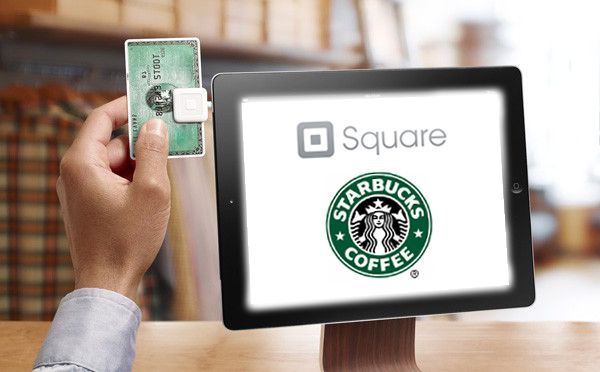
Cashless Squares Up At Starbucks

(Photo: BetaNews.com)
A typical encounter at the cash register consists of either fumbling with cash and change, or pulling out your credit card, swipe it, wait for an authorization, followed by a signing of a console or receipt. An alternative payment method has been emerging in small, and micro, businesses. 

These alternative payment methods will be more apparent in coming months as a big deal has been struck by caffeine distribution giant, Starbucks, and mobile payment startup, Square.

In early August, Starbucks has struck a deal and will be investing $25 million to outfit a network of 7000 participating stores with the mobile payment system, Square. Howard Schultz, CEO of Starbucks, notes that, “the smartphone is the primary device in our lives.” This deal will provide Starbucks with a significant discount on credit card processing fees. Traditional credit card processing methods required businesses to pay the credit card company 2.5-5% plus equipment rental and usage charges. Square on the other hand charges a flat 2.75% with free equipment, in the form of a dongle that attaches via headphone jack on any smartphone or tablet.

In 2009, Jack Dorsey, founder of Twitter, took a leap in to innovating the mobile payment space. With a simple philosophy, “everyone should be able to accept credit cards. It should be easy and free to get set up, it should use simple technology people already own, and, most importantly, it should instantly adapt to any size business”.

Square consists of four major components: a card reader, Pay With Square app, Square Register, and a Square Card Reader. The card reader is a plastic device which plugs into the audio jack of an iPhone, iPod Touch, iPad and Android based mobile phones. This allows any smartphone to be used as a credit card swiping machine. Pay With Square is an app which allows customers check in a Square enabled business and set up tabs and pay with their names. It also enables them to receive electronic receipts. The Square Register is available for the iPad and transforms it into a credit card management system. Square Card Reader is another app available free of cost for iOS and Android, and is the actual interface that is utilized by the business to manage payments made via the card reader or Pay With Square app.

Previously focused around aiding small and micro businesses, with this $25 million investment from Starbucks, Square has raked in $200 million in new funding, positioning Square with a $3.25 billion valuation. As of March, Square has processed $4 billion a year in mobile payments transactions in this year alone through its 1 million registered merchants. 

With well-established companies, such as PayPal, Google Wallet, Intuit, LevelUp, and dozens others, fighting to gain market share in the space of mobile payments, the addition to the 7000 stores that have been added through the Starbucks deal, Square has taken a huge lead ahead of their growing field of competition.

The exposure provided through Starbucks to spotlight an seamless alternative payment method will greatly expand the emerging cashless zeitgeist. Expect to see more alternative payment methods at an ever growing number businesses, from your corner store to one of the thousands of Starbucks coffee shops.

About the Author


Phil Ng is a Social Media Analyst at IIR USA with a specialized focus on technology and technology culture. He may be reached at PNg@iirusa.com.


Share this article with your social network, just click below to share now!


Wednesday, August 15, 2012

The B2B Applications of Prepaid: Implications of Mobile Payments

In the video below, Carol Lee Mitchell of Global Prepaid at MasterCard sits down with Marilyn Bochicchio, CEO of Paybefore, earlier this year at Prepaid Expo USA 2012 to discuss Paybefore's mission.

Marilyn speaks about emerging and developed market trends She highlights the B2B applications of prepaid and the implications of mobile payments. She also shares her views about the existing regulatory environment in the US.

As the leading prepaid and emerging payments publishing company, Paybefore sponsors the Paybefore Awards®:

Now in its seventh  year, Paybefore Awards is the oldest and most prestigious awards to recognize excellence in the worldwide prepaid and stored value industry.

Three winners will be selected in approximately 20 categories, including Most Innovative Prepaid Solution and Breakout Prepaid Company of the Year. Best-in-Category and Industry Achievement winners will be announced at the Prepaid Expo USA, March 4-6, 2013, in Orlando, Fla. Applications will be available in mid-September, with nominations due Friday, November 16, 2012.


Editor's Note:  We encourage you to learn more and become involved with Prepaid Expo 2013, bringing together professionals from leading retailers, processors, financial institutions, service providers and marketers in the prepaid marketplace every year. Over 12,000 people have attended Prepaid Expo USA since 2007 to hear industry experts discuss what's next in the growing prepaid marketplace and where it fits in our new economy. Visit www.PrepaidExpoUSA.com to learn more.

* Thank you! Save 10% off the standard rate when you register for Prepaid Expo 2013, use Prepaid Expo Blog Reader VIP Code: XU2648BLOG10.

About the Author

Valerie M. Russo is a Senior Social Media Strategist at IIR USA and Managing Editor of the Prepaid Expo Blog. She has worked in media positions at Hachette Book Group, Aol, and Thomson Reuters and has an anthropology and brand-building background. She is also published poet and maintains a literary blog. She will be live blogging during Prepaid Expo 2013, taking place March 4-6, 2013, in Orlando, Florida and hopes to meet you there. She may be reached at vrusso@iirusa.com. Follow her @Literanista.


Share this article with your social network, just click below to share now!


Wednesday, August 8, 2012

The Future of Prepaid List: 25 Books to Read Now

There is no doubt the nature and landscape of the Prepaid industry as a whole is changing. Below is a list of books we have compiled that could foster a discourse on what lays ahead for the entire prepaid marketplace. Enjoy!

The Future of Prepaid List: 25 Books to Read Now

  1. Ghost in the Wires: My Adventures as the World's Most Wanted Hacker by Kevin Mitnick, Steve Wozniak (Foreword), William L. Simon, 2011 [Go]
  2. The SmartPhone Wallet: Understanding the Disruption Ahead by David W. Schropfer, 2010 [Go]
  3. Insufficient Funds: Savings, Assets, Credit, and Banking Among Low-Income Households by Rebecca M. Blank, Michael S. Barr, 2011 [Go]
  4. The Mobile Wave: How Mobile Intelligence Will Change Everything by Michael Saylor, 2012 [Go]
  5. Resilience: Why Things Bounce Back by Andrew Zolli, 2012 [Go]
  6. Social Business By Design: Transformative Social Media Strategies for the Connected Company by Dion Hinchcliffe, Peter Kim, Jeff Dachis, 2012, [Go]
  7. BRICs and Beyond: Lessons on Emerging Markets by Stephanie Jones, 2012, [Go]
  8. The Death of the Internet by Markus Jakobsson, 2012 [Go]
  9. The Financial Services Marketing Handbook: Tactics and Techniques That Produce Results by Evelyn Ehrlich PhD, Duke Fanelli, 2012 [Go]
  10. Interop: The Promise and Perils of Highly Interconnected Systems by John Palfrey, 2012 [Go]
  11. The Value Path: Embedding Innovation in Everyday Business When the Customer Makes the Rules by Peter G.W. Keen, Ronald O. Williams, 2012 [Go]
  12. Auditing Social Media: A Governance and Risk Guide by Peter R. Scott, J. Mike Jacka, 2011 [Go]
  13. Moving Illegal Proceeds: Challenges Exist in the Federal Government's Effort to Stem Cross-Border Currency Smuggling by United States Government Accountability Office, 2012 [Go]
  14. Innovation Reinvented: Six Games that Drive Growth by Roger Miller, Marcel Côte, 2012 [Go]
  15. The End of Money: Counterfeiters, Preachers, Techies, Dreamers--and the Coming Cashless Society by David Wolman, 2012 [Go]
  16. The Remittance Market in India: Opportunities, Challenges, and Policy Options by Gabi G. Afram, 2012 [Go]
  17. The End of Business As Usual: Rewire the Way You Work to Succeed in the Consumer Revolution by Brian Solis, 2011 [Go]
  18. No Slack: The Financial Lives of Low-Income Americans by Michael S. Barr, 2012 [Go]
  19. Likeable Social Media: How to Delight Your Customers, Create an Irresistible Brand, and Be Generally Amazing on Facebook (And Other Social Networks) by Dave Kerpen, 2011 [Go]
  20. Protecting Mobile Money against Financial Crimes: Global Policy Challenges and Solutions by Pierre-Laurent Chatain, Andrew Zerzan, Wameek Noor, Najah Dannaoui, Louis de Koker, 2011 [Go]
  21. High-Tech, High-Touch Customer Service: Inspire Timeless Loyalty in the Demanding New World of Social Commerce by Micah Solomon, 2012 [Go]
  22. Migration and Remittances during the Global Financial Crisis and Beyond by Ibrahim Sirkeci, Jeffrey H. Cohen, Dilip Ratha, 2012 [Go]
  23. The future of payment systems: A case study on digiPROOF, a fingerprint based payment solution by Markus Mayer, 2012, [Go]
  24. Kingpin: How One Hacker Took Over the Billion-Dollar Cybercrime Underground by Kevin Poulsen, 2012, [Go]
  25. Outrageous Fortunes: The Twelve Surprising Trends That Will Reshape the Global Economy by Daniel Altman, 2012, [Go]
Which book would you add?


Editor's Note:  We encourage you to learn more and become involved with Prepaid Expo 2013, bringing together professionals from leading retailers, processors, financial institutions, service providers and marketers in the prepaid marketplace every year. Over 12,000 people have attended Prepaid Expo USA since 2007 to hear industry experts discuss what's next in the growing prepaid marketplace and where it fits in our new economy. Visit www.PrepaidExpoUSA.com to learn more.

* Thank you! Save 10% off the standard rate when you register for Prepaid Expo 2013, use Prepaid Expo Blog Reader VIP Code: XU2648BLOG10.

About the Author

Valerie M. Russo is a Senior Social Media Strategist at IIR USA and Managing Editor of the Prepaid Expo Blog. She has worked in media positions at Hachette Book Group, Aol, and Thomson Reuters and has an anthropology and brand-building background. She is also published poet and maintains a literary blog. She will be live blogging during Prepaid Expo 2013, taking place March 4-6, 2013, in Orlando, Florida and hopes to meet you there. She may be reached at vrusso@iirusa.com. Follow her @Literanista.


Share this article with your social network, just click below to share now!


Thursday, August 2, 2012

The Prepaid Marketplace in Brazil & Latin America

Yesterday, Anabel Perez, the CEO of NovoPayment wrote Digital Money, Mobile Wallets and Latin America at the Huffington Post.

Earlier this year, Marcio Franklin of MasterCard Brazil sat down with Sergio Marcondes, the CEO of Accentiv' Mimetica at Prepaid Expo USA 2012 to discuss prepaid in the Brazilian market. If you are keeping an eye on emerging markets, you may want to take a look at the video below.


Editor's Note:  We encourage you to learn more and become involved with Prepaid Expo 2013, bringing together professionals from leading retailers, processors, financial institutions, service providers and marketers in the prepaid marketplace every year. Over 12,000 people have attended Prepaid Expo USA since 2007 to hear industry experts discuss what's next in the growing prepaid marketplace and where it fits in our new economy. Visit www.PrepaidExpoUSA.com to learn more.

* Thank you! Save 10% off the standard rate when you register for Prepaid Expo 2013, use Prepaid Expo Blog Reader VIP Code: XU2648BLOG10.

About the Author

Valerie M. Russo is a Senior Social Media Strategist at IIR USA and Managing Editor of the Prepaid Expo Blog. She has worked in media positions at Hachette Book Group, Aol, and Thomson Reuters and has an anthropology and brand-building background. She is also published poet and maintains a literary blog. She will be live blogging during Prepaid Expo 2013, taking place March 4-6, 2013, in Orlando, Florida and hopes to meet you there. She may be reached at vrusso@iirusa.com. Follow her @Literanista.


Share this article with your social network, just click below to share now!


Wednesday, July 25, 2012

The Growth of Prepaid, The Decline of Cash

A world without
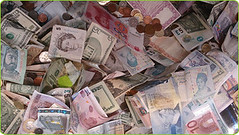
Cash
Cash (Photo: BlatantWorld.com)
cash is something that is hard to imagine, perhaps, we won’t see it in our lifetime. Granted, it may well happen but not in the next few years. However, there is already an evolution going on in regards of how consumers to pay for items. Credit cards and debit cards are the go-to options when paying for transactions in stores, restaurants, and even in the subway. Some may have even gone so far as to not carry cash around at all anymore. All they have is something that’s plastic in their back pocket. Chicago resident Louise Collis has taken this to heart, leaving behind cash and only using her cards. But she is not alone. 

There are times where you may find yourself going weeks, months, maybe even a year without even using cash. The usage of cards, now, is based upon the economy. Cash is still in high use because of the current recession from which we are recovering. But as the economy improves, the usage of credit cards will also increase. There are stores now that only accept cards or gift cards. After consumer complaints, commerce has listened. Many stores, offer consumers the opportunity to buy gift cards with cash and then use the gift cards to purchase items in-store or elsewhere. Consumers get the best of both worlds, this way - no bank account or credit needed.

The exchange of debit, and credit cards for cash currency happens all the time between people in more affluent societies.  But there are many stores that are not rushing at the chance to cater solely to them. WalMart is giving customers the opportunity to pay for items online with cash. 


It's not just stores either. From Japan to the United States to Mexico, people are using paper currency less. Whether it's transit or payroll, tax returns or remittances, many more people are using pre-loaded cards or apps for transactions without cash money ever coming into play.


Though I believe this country is far from removing cash all together, Sweden has become a cashless society where churches, yes, churches, accept your cards now instead of paper money. Could the U.S. possibly live in a society like that? Absolutely, but to believe that this will happen a year, ten or twenty years down the line, may be a bit of a stretch. It is an interesting notion to think about and that will be explored further. 


About the Author


Adam Wells studies English at Pace University and can be reached at AWells@IIRUSA.com. 


Share this article with your social network, just click below to share now!


Wednesday, July 18, 2012

Welcome to the 25 prepaid facts blog series

English: 'I'm Lovin It' — HM1(FMF) Fred Turner...
 I'm Lovin It' — HM1(FMF) Fred Turner swipes his gift card in McDonald's new card machine, April 4. The new machine now allows customers to use debit, credit or gift cards to purchase food. (Photo: Wikipedia)
For the next several weeks, there will be a series of informative blog posts on the fascinating but evolving world of prepaid cards. Each post written will be an extension of a previous blog post: The “25 intriguing thingsyou should know about prepaid cards” post offered insightful information pertaining to the growing usage of prepaid cards. In the post, the facts included the abundance amount of money being filled on the prepaid cards, the high volume usage between the different incomes and the new way to pay for items.

With this new series, I will be able to go a little deeper into those fun facts and  offer some insights. The topics will be filled with variety with the hope that they will cause you to think about our changing world. The posts will make you wonder what it would be like if cash was virtually nonexistent (like the penny). Others will make you think how it would to interact with one another only using your debt or credit card. By interaction, I mean the idea of owing someone money and cash is not available, you may use your card. And imagine that only your phone would be used when purchasing items. These are just a few teasers for what is to come.

Prepaid is an ever expanding industry and the ideas mentioned before could be very possible for in the next few years to come. Granted, the extinction of cash is highly unlikely to happen in our lifetime (or is it?), however, stores using only gift cards and meters allowing people to use their cards instead of putting coins are already a reality. Most people now only carry their cards; they simply do not carry cash on them, they rather just use their card. Soon we all will wake up one day and things that seem so abstract to most people will become reality.

And, this is what the series will be about. So over the next few weeks I invite you, the reader, to be intrigued by the posts provided and imagine the way the world will be changing and the way the prepaid cards space is converging with other industries..

About the Author


Adam Wells studies English at Pace University and can be reached at AWells@IIRUSA.com. 


Share this article with your social network, just click below to share now!


Wednesday, July 11, 2012

Introducing the Prepaid Expo Executive Report Series (PEERS)

We would like to introduce you to the Prepaid Expo Executive Report Series (PEERS). PEERS is a series of summary briefs for prepaid business executives focused on key developments and topical hot spots driving prepaid industry change.


Content is based on – but not restricted to – presentations, panels and subject matter covered in the Prepaid Expo global event portfolio. Additional perspectives and insights are provided through exclusive interviews and research with prepaid industry leaders and experts.


The first issue of PEERS focuses on Regulation. It covers key regulatory developments and provides analysis from experts on topics including:

Dodd-Frank Fallout
Durban: Certainties and Uncertainties
Reg. E Extension Implications
Fraud Facts and Fundamentals
PLUS: a Special Feature Interview on Mobile and Emerging Payment Regulation
 
To receive Issue 1, click here and complete your contact details. The report will then be sent to you as a PDF via email*. 

PEERS is produced by Prepaid Expo, the world’s largest and most authoritative conference and exposition dedicated to creating business opportunities for closed- and open-loop prepaid professionals and their partners worldwide. To learn more about Prepaid Expo 2013 and how you can get involved, visit www.prepaidexpousa.com

* Thank you for visiting the Prepaid Expo Blog: To receive 10%  off the prevailing rate when you register for Prepaid Expo 2013, mention VIP Code: XU2648BLOG10.


Share this article with your social network, just click below to share now!


Wednesday, June 27, 2012

25 Intriguing Things About Prepaid You Should Know

The Prepaid space is rapidly evolving and transforming, more than ever before. Here are 25 things of note, we thought you might find interesting:


Outlook


1. $82 billion. That's the amount expected to be loaded onto Prepaid cards in 2012. (Tweet this)

2. The amount loaded on prepaid cards in the U.S. is growing by 42% per year, will hit $167 billion in 2014(Tweet this)

3. Mobile POS payments is expected to grow from $362.6 million in 2011 to $1.4 billion in 2017. (Tweet this)

4. The use of cash is predicted to decline 3% a year until 2015, (Tweet this) through 2015, the use of cash will decline by nearly $200 billion. (Tweet this)

5. Cash point-of-sale purchases is expected to drop to 23% by 2017. (Tweet this)

6. Prepaid cards are to overtake gift cards in terms of sales by 2014, reach $139.4 billion by 2017 (Tweet this)

Usage


7. Where prepaid cards are purchased makes a big difference in how they are likely to be used (Tweet this)


8. Consumers are using prepaid cards as a way to access wages, direct deposits increased by nearly 70% in 2011. (Tweet this)

9. An estimated $57 billion was loaded onto prepaid cards in 2011. (Tweet this)  

10. 22.1% of consumers likely to use prepaid cards earn between $66,000 and $100,000 a year. (Tweet this)

11. 56 percent of underbanked consumers in this recent study used their prepaid card for online purchases (Tweet this)


Mobile


12. About 15% of the U.S. population is underbanked. They are more likely to use their mobile device for banking. (Tweet this)

13. Mobile payments is said to overtake credit card payments by 2020. (Tweet this)


14. NFC-enabled mobile payments and contactless credit cards are positioned to rival cash by 2016. (Tweet this)


15. 1 in 3 underbanked consumers are likely to conduct international mobile money person-to-person (P2P) transfers. (Tweet this) 


15. More than 10 percent of mobile phone owners have already made payments using their phones. (Tweet this)

Unbanked/Underbanked


16. The share of households with checking declined four percentage points from 2010 to 2011. (Tweet this) 


17. 53% of Gen Y and 47% of underbanked consumers report that rewards would encourage their adoption and use of prepaid cards.  (Tweet this)

18. An estimated 35 million US adults (or 15% of the U.S. population) is underbanked. (Tweet this)

Cashless Society

19. By 2014, transactions conducted via wireless connections from phones world-wide are expected to total $1.13 trillion. (Tweet this)

20. Only 27% of all point-of-sale purchases in 2011 were made with cash (Tweet this)

21. Fifty-three percent of all person-to-person payments are in cash  (Tweet this)

22. In the UK, cash accounts for less than 3% of the “money" in use. (Tweet this)

Global Lens/Emerging Markets

23. The Chinese prepaid cards market valued over US$160 billion in 2011. (Tweet this)

24. Global mobile transactions grew to $241 billion in 2011, and are expected to reach $1 trillion by 2015. (Tweet this)


25. Growth rates in excess of 50% a year annually are expected in China and Poland on cards or through alternative payments channels. Japan has expected growth of 20% a year. (Tweet this)


About the Author


Valerie M. Russo is a Senior Social Media Strategist at IIR USA with a technology, anthropology, marketing and publishing business acumen.  She will be attending Prepaid Expo 2013 and covering the event live via Twitter and the Prepaid Expo Blog. She is a published poet and also maintains a literary blog. She may be reached atvrusso@iirusa.com. Follow her @Literanista.


Share this article with your social network, just click below to share now!


Thursday, June 21, 2012

Prepaid: 10 Mobile Payments Infographics You Should View Today

Covering the mobile payments beat, we've tracked down 10 great infographics we think might be useful for the Prepaid industry:


1. An overview of the 5 Main Types of Mobile Payments:

The most important mobile payment infographic. Ever.
 
Compliments of MobilePaymentsToday.com

2. Mobile Payments Forecast

via mobinable


3. Will NFC Technology Drive Mobile Payments Initiatives?

via bostinno
4. The Value of Mobile Payments

via visual.ly


5. Global Trends

via Gigaom

6.  Market Size

via Mobinable


7. The Mobile Payment Revolution vis a vis Processing

via Onlinemarketing-trends
8. Who's who is the contactless space

via Mobilefiblog


9. Demographics

via Onlinemarketing-trends

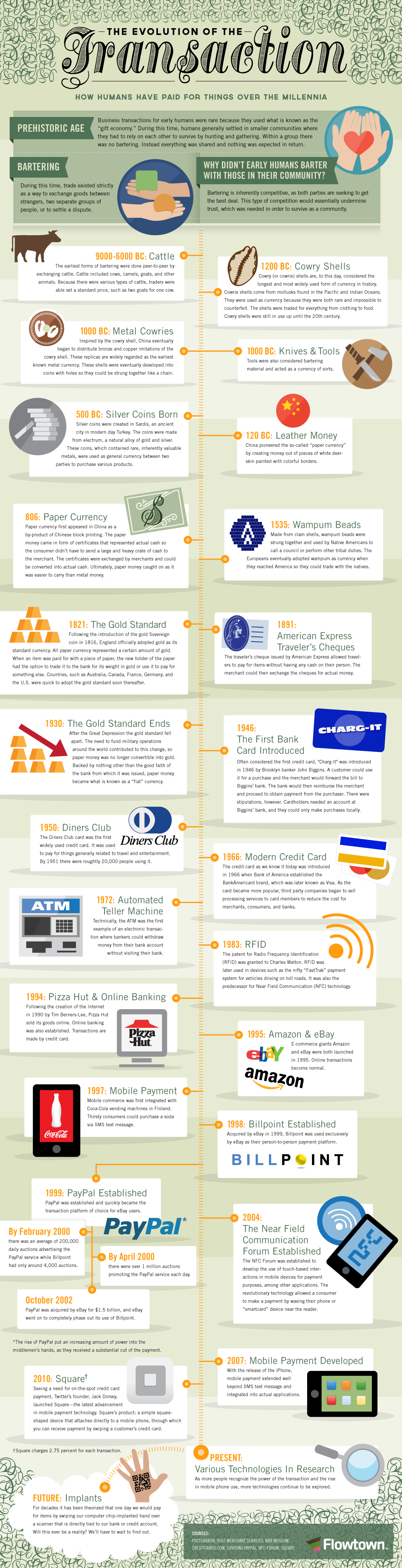
10. A retrospective of payment  transaction throughout history

via  Paylane


Share this article with your social network, just click below to share now!


Wednesday, June 13, 2012

Wednesday, June 6, 2012

What keeps Prepaid’s CEO’s up at night?


Share this article with your social network, just click below to share now!